


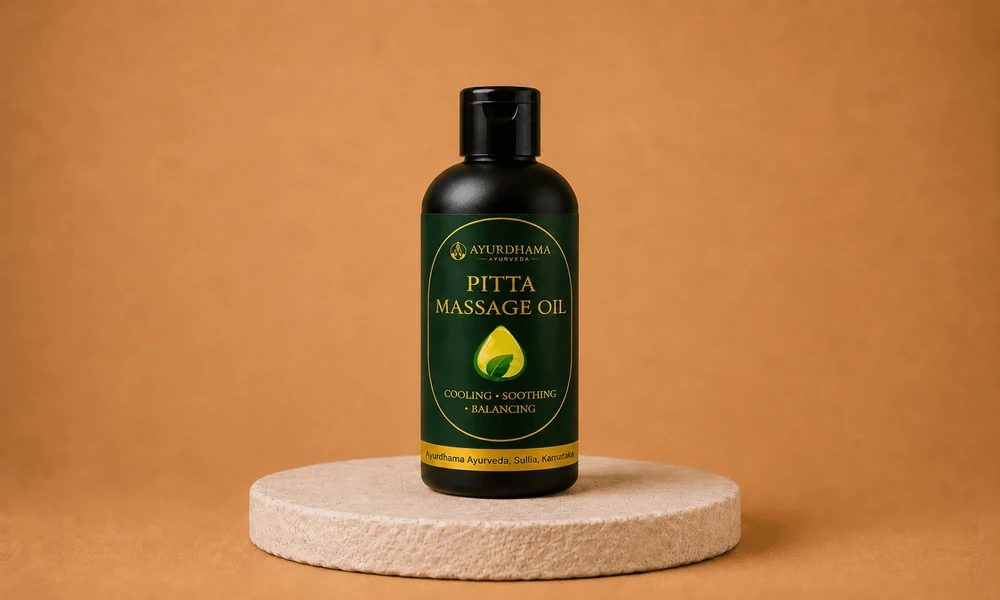
If your skin tends to run warm, react easily to heat and spicy foods, and flare with redness or sensitivity during summer months, Ayurvedic medicine has a name for what is happening: elevated pitta. Pitta massage oil formulated to cool and calm the body’s fire element is one of the most effective tools Ayurveda offers for bringing this imbalance back into check, and understanding why it works requires a brief introduction to how Ayurvedic skincare thinks about the relationship between internal constitution and external skin behaviour.
Understanding Pitta and Why It Affects the Skin
In Ayurvedic philosophy, pitta is the dosha associated with fire and transformation. When balanced, pitta manifests as sharp intellect, strong digestion, and radiant skin. When elevated, its heat expresses through the body’s largest organ: the skin. Redness, inflammation, hyperpigmentation, sensitivity to heat, and a tendency toward breakouts during summer are all characteristic expressions of excess pitta in the skin and blood. Pitta body oil addresses this excess directly by delivering cooling botanical compounds through the skin’s surface, counterbalancing the internal heat that drives these external symptoms.
The Role of Abhyanga in Pitta Management
Abhyanga, the Ayurvedic practice of self-massage with therapeutic oil, is one of the most foundational daily wellness practices in the Ayurvedic tradition. For pitta types and during pitta season, which aligns with summer and early autumn in most of the US, the practice involves massaging the body with a pitta body oil formulated with cooling, anti-inflammatory botanical ingredients before bathing. The massage itself, with long, slow strokes rather than the vigorous techniques more appropriate for vata types, is calming to the nervous system and helps draw the oil’s active botanicals into the deeper tissue layers where pitta accumulates.
Key Ingredients in an Effective Pitta Massage Oil
The efficacy of a pitta massage oil depends entirely on the selection and quality of its botanical ingredients. Coconut oil is the foundational base for most pitta body oils because of its inherently cooling properties, recognised both in Ayurvedic tradition and supported by modern cosmetic science for its ability to reduce skin surface temperature and provide anti-inflammatory fatty acids to reactive skin. Sandalwood is a classic pitta-cooling botanical, revered in Ayurvedic medicine for its ability to reduce inflammation and calm sensitive, reactive skin. Rose has long been associated in Ayurveda with heart-opening, cooling, and anti-inflammatory properties that complement sandalwood effectively in a pitta-balancing formulation. Neem contributes antibacterial and anti-inflammatory properties that address the microbial component of pitta-related skin congestion and inflammation.
How to Use Pitta Body Oil for Maximum Benefit
The traditional Ayurvedic instruction for abhyanga practice is to apply the oil to the body before bathing, allowing it to penetrate for a minimum of fifteen to thirty minutes before washing off with warm rather than hot water. For pitta massage oil, using cool or warm rather than hot water preserves more of the oil’s active compounds on the skin surface and avoids the stimulating, pitta-aggravating effect that very hot showers can produce. Morning application is traditionally preferred for pitta types, as it sets a cooling, calm tone for the day, though evening application is equally beneficial for those dealing with elevated heat and skin reactivity.
Seasonal Pitta Care Beyond the Massage Oil
Herbal body oil is one component of a broader pitta-balancing skincare and lifestyle approach. Dietary choices that reduce hot, spicy, and fermented foods, cooling practices like swimming and early morning outdoor exercise, and skincare routines that use cooling botanicals at every step complement the benefits of daily pitta body oil application. This integrated approach, addressing pitta simultaneously from inside and outside, produces more significant and lasting results than any single product can achieve independently.